
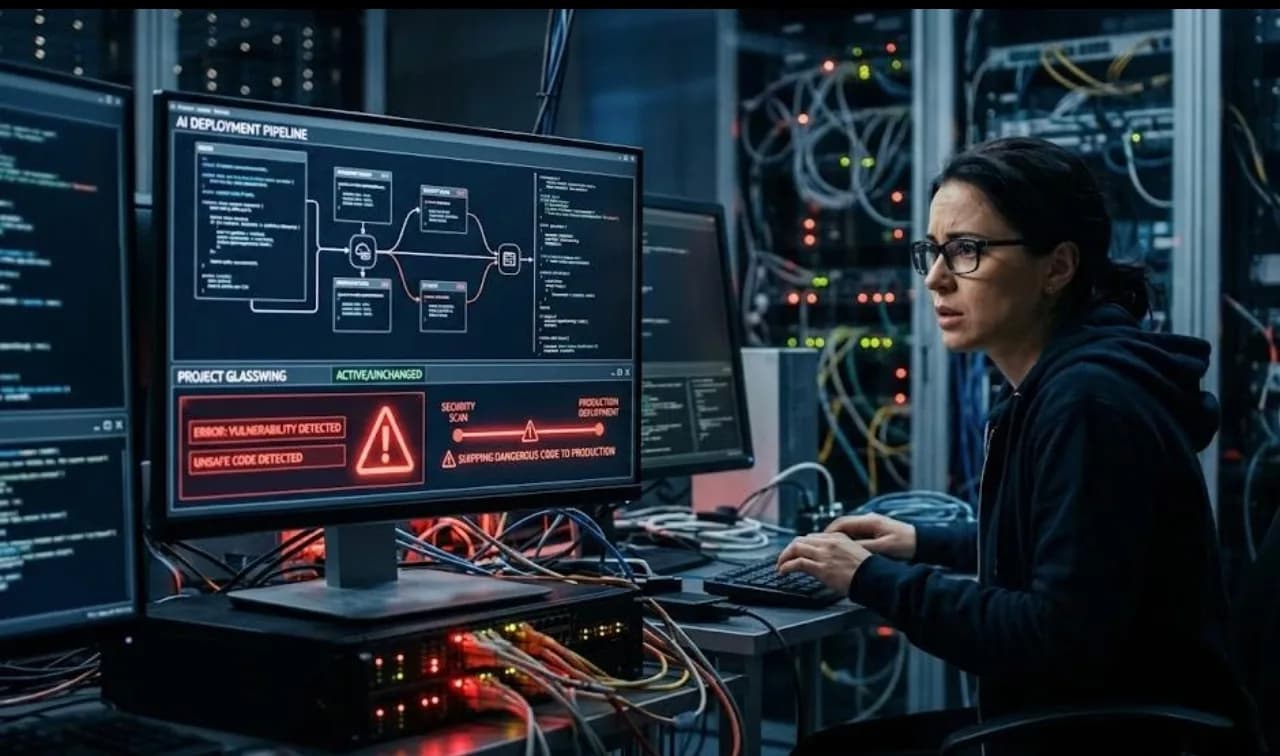
The rapid development of artificial intelligence is creating new challenges for cybersecurity teams, with experts warning that the growing race to discover and repair software vulnerabilities could lead to more technology disruptions.
AI tools can scan large amounts of software code and identify security weaknesses much faster than traditional methods. However, cybercriminals can also use these technologies to develop attacks and exploit vulnerabilities before companies have time to fix them.
Why Are Technology Outages Increasing?
According to a Reuters report published on November 18, Microsoft fixed more than 1,200 software vulnerabilities during November, nearly 20 times its figure from the same period a year earlier.
More than 100,000 software vulnerabilities were publicly disclosed worldwide in 2026, highlighting the growing pressure on security teams.
Companies are increasingly releasing emergency software patches to protect their systems. However, updates that are rushed or inadequately tested can introduce new technical problems, potentially disrupting important digital services.
Experts Warn About Growing Risks
Recent disruptions affecting banks, airlines and technology platforms have raised concerns about the reliability of digital infrastructure.
Experts have cautioned that these incidents do not necessarily share a common cause or indicate a coordinated cyberattack. Instead, software weaknesses, infrastructure failures and rushed updates can independently create serious disruptions.
What Should Companies Do?
Cybersecurity specialists recommend testing software updates before large-scale deployment, strengthening backup systems and improving monitoring of critical infrastructure.
As AI becomes more powerful, organisations will need to balance faster security responses with careful testing to prevent new vulnerabilities and unexpected outages.
Published: Sunday, 22 November 2026 | 3:09 PM IST