
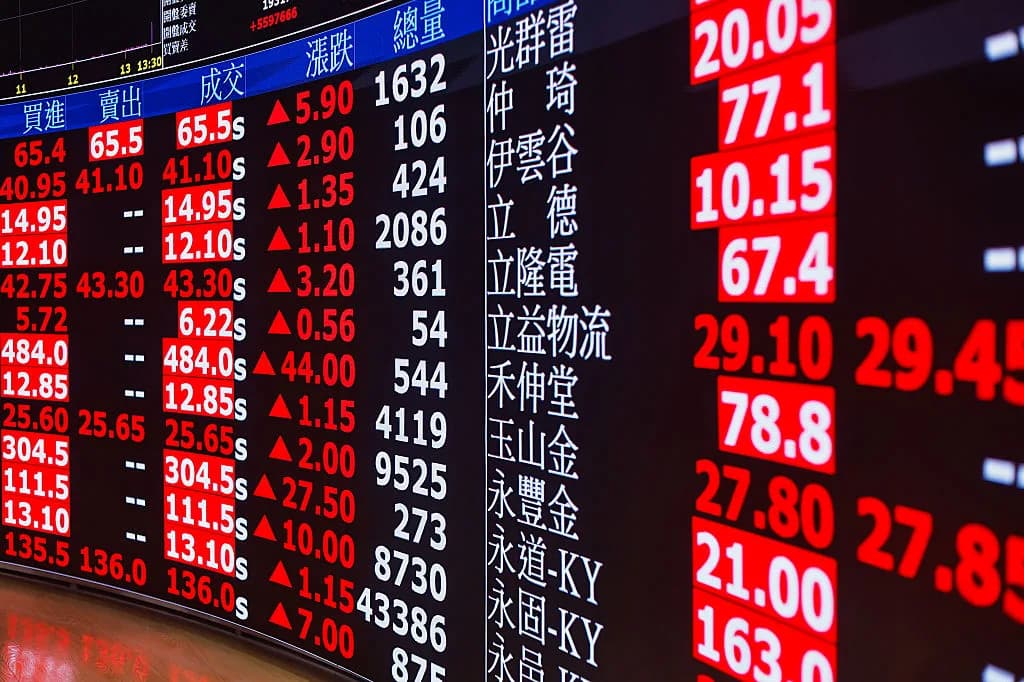
Global stocks slumped, and the dollar softened on Wednesday as Democrats scored a decisive win in the US midterm elections, fuelling fears the blue sweep could disrupt the data-centre buildout that has powered the AI trade and hurt tech spending.
In a major setback to President Donald Trump and Republicans, Democrats notched stunning victories in the South Carolina, Texas and Ohio Senate races, capturing majorities in both the Senate and House that reached deep into Republican strongholds.
The breadth of the party’s success was underscored by gains in districts long considered safely conservative, highlighting a political shift that caught many investors off guard.
The reaction from investors was to sell stocks, especially AI-linked shares, putting the dollar under pressure, while cryptocurrencies fell at the prospect of stronger regulations. Bonds, though, found favour as investors sought safety.
Futures for the S&P 500 EScv1slid 0.6% while Nasdaq futures NQc1 fell more than 2% before cutting losses to trade down 0.8%. The yield on the benchmark US 10-year Treasury note US10 fell 6 basis points to 4.906%, pushing the dollar sharply lower.
European futures STXEc1 were down 1.4%. In Asia, the bulk of selling was in AI stocks, with chipmakers Samsung, SK Hynix and TSMC sliding sharply. AI proxy SoftBank led Japan’s benchmarkNikkei 3% lower to an over five-month trough.
“Tighter regulatory scrutiny of technology and AI companies along with the higher likelihood of political gridlock beckon with a Democrat sweep,” said Prashant Newnaha, senior rates strategist at TD Securities in Singapore.
The AI boom has helped propel global markets in recent years, driven by heavy spending from tech giants racing to build data centres and expand computing capacity. That has left investors acutely sensitive to anything that could derail the technology’s rapid expansion.
Tuesday’s outcome could hold broad implications for market-sensitive areas including the AI data-centre buildout, the US fiscal outlook, defence spending and regulation in areas such as healthcare, banking and cryptocurrencies.
Charu Chanana, chief investment strategist at Saxo, said the sharper decline in Nasdaq futures reflects concerns that a shift in political control could bring greater regulatory scrutiny of AI and Big Tech, at a time when investors are already questioning elevated valuations and rising AI spending.
STOCKS SINK AS INVESTORS RUSH FOR SAFETY OF BONDS
Treasuries rallied as investors expect gridlock in Washington to cut government spending while AI regulation could slow growth and reduce the need for rate hikes.
“Bonds are coming out as the clear winner as markets put the AI trade on the chopping block and embrace the higher possibility that further tax cuts are put on ice and government spending slows,” said TD Securities’ Newnaha.
Kim Seok-hwan, an analyst at Mirae Asset Securities, said the Democrats’ victory in Texas is likely to weigh on chip stocks, raising fears of tighter curbs on AI data-centre development in one of the fastest-growing markets for computing infrastructure in the US.
“If Texas declares a moratorium on data centres, as New York did, projects could face further delays,” Kim said. “Today’s market reaction is clearly reflecting concerns and uncertainty over these issues.”
In currencies, the dollar slid broadly against major peers. The euro rose 0.5% to $1.1249, while sterling firmed 0.37% to $1.3464. That left the dollar index 0.37% lower at 101.34.
Safe havens Japanese yen and the Swiss franc CHF= notched the biggest gains in a volatile session. The yen was 0.7% stronger at 157.55 per US dollar, while Swiss franc firmed almost 0.8% at 0.8144 per US dollar.
In the oil market, prices were choppy on Wednesday after sliding to a four-week low in the previous session as investors weighed talks to end the wars in Ukraine and Iran against worries that recent attacks in both conflicts could further disrupt supplies.
Published: Wednesday, 4 November 2026 | 12:52 PM IST