
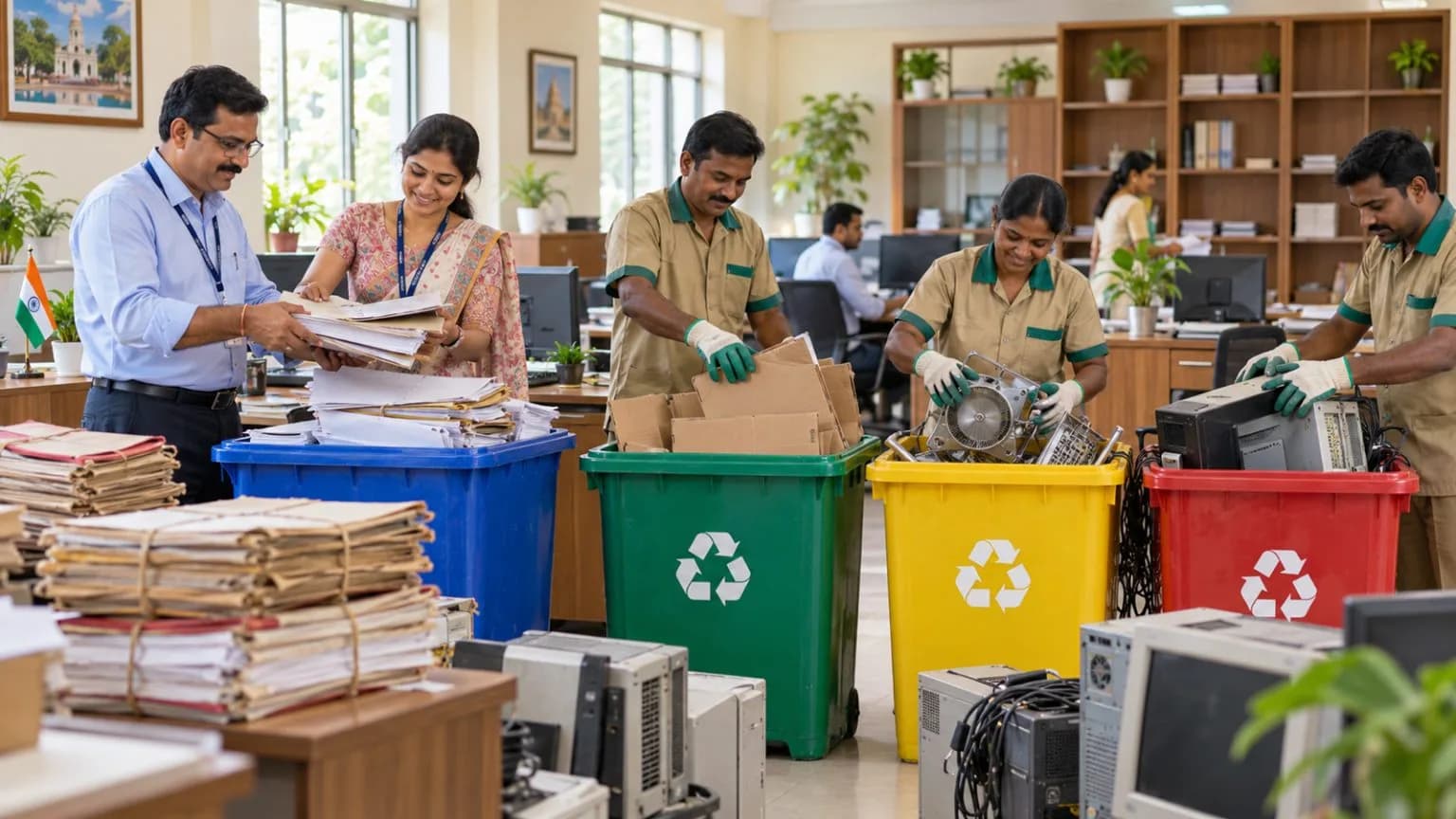
Special Swachhata Campaign 6.0 has generated ₹491.28 crore through scrap disposal and covered 8,34,509 cleanliness sites as of October 19, surpassing the figures recorded during the corresponding period of last year’s campaign.
Reviewing its progress, Union Minister Jitendra Singh said the initiative had also freed 116 lakh square feet of space across government offices and establishments.
The number of cleanliness sites covered was 3.03 times the 2,75,432 sites recorded during the corresponding period of Special Campaign 5.0 in 2025. Scrap disposal revenue rose to ₹491.28 crore from ₹304.72 crore, while space freed increased from 113.12 lakh square feet to 116 lakh square feet.
The Ministry of Railways was a major contributor, generating ₹425.06 crore through scrap disposal. The Department of School Education and Literacy reported cleanliness activities at 4,15,353 sites.
The Department of Administrative Reforms and Public Grievances (DARPG) freed 1,200 square feet on a single floor of its office premises, reflecting the campaign’s emphasis on putting underutilised space to productive use.
Running from October 2 to 31, the campaign covers cleanliness, disposal of obsolete materials, e-waste management, review of physical and electronic files, and clearance of pending references and public grievances.
Singh urged government secretaries to expand participation across field offices and establishments and organise dedicated one-day drives alongside ongoing activities.
He said the initiative had evolved from clearing physical files to addressing electronic records, e-waste and obsolete materials, with scrap disposal revenue becoming an important component.
During the review, Singh called on ministries and departments to assess office space according to functional requirements, adopting a “utility versus availability” approach. He also asked them to share successful initiatives with DARPG to encourage their replication.
The Minister stressed the need for greater public awareness of responsible waste disposal, recycling and scientific e-waste management. He called for technologies involving the reuse and recycling of materials, including plastic and used cooking oil, to be showcased more widely.
The Department of Personnel and Training (DoPT) informed the meeting that it had adopted electric vehicles for departmental use as part of efforts to support cleaner government operations.
Published: Tuesday, 20 October 2026 | 5:54 PM IST