
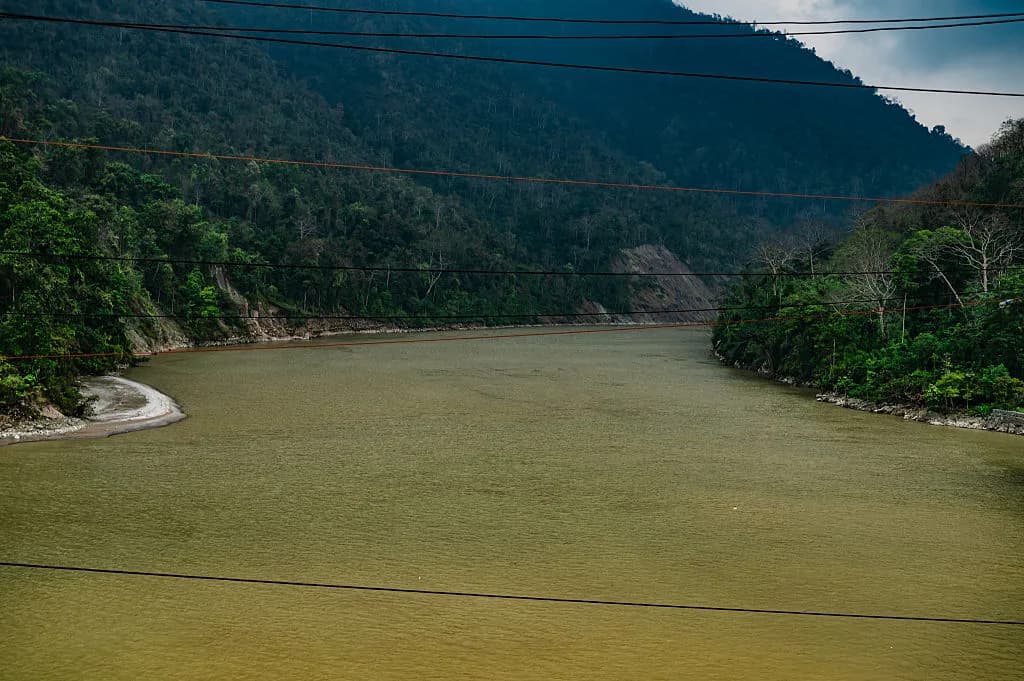
A Glacial Lake Outburst Flood (GLOF) reported at Lemthang in Bhutan has triggered a high alert across North Bengal, with authorities initiating emergency preparedness measures amid the possibility of flooding along the Sankosh River and its tributaries.
Overflowing water from the glacial lake is flowing downstream through the Mo Chhu River towards the Sankosh River, prompting authorities to advise residents in vulnerable areas to immediately move to safer locations.
Residents in the Darjeeling hills, Terai and Dooars regions have also been urged to remain alert and follow official advisories.
Darjeeling BJP MP Raju Bista shared an alert on social media platform X, urging people living in the catchment areas of the Sankosh River and its tributaries to move to safe locations as a precautionary measure.
State Minister Nisith Pramanik said the state disaster management team had been activated and the National Disaster Response Force (NDRF) had been alerted. Disaster management volunteers have also been instructed to remain present at vulnerable locations.
He said the water was expected to reach the plains within the next five to six hours, raising concerns about possible flooding in the region.
Meanwhile, Alipurduar Superintendent of Police Amit Kumar Shaw appealed to residents not to panic, stating that the situation was being closely monitored in coordination with Bhutanese authorities and various disaster response agencies.
Shaw said the State Disaster Response Force (SDRF) was already deployed in the area, while an NDRF team was on its way. Civil Defence personnel had also been mobilised to support emergency preparedness measures.
According to the police official, approximately 4,000 to 5,000 people had been moved to shelters, with school buildings being used as relief centres. More than 6,000 additional people had also been relocated to safer areas.
The administration has arranged dry food, drinking water and other essential facilities, including toilets, at relief centres.
Shaw said the intensity of the water flow had decreased slightly, according to the latest information, but a red alert remained in force for the Sankosh River system.
He cautioned that the approaching water could carry dead fish and debris, including large pieces of wood and concrete, and urged residents to exercise caution.
A Glacial Lake Outburst Flood, commonly known as GLOF or jökulhlaup, occurs when a natural barrier holding back a glacial lake collapses or is breached, releasing a large volume of water downstream. Such floods can cause sudden and extensive damage to settlements, infrastructure and agricultural areas.
Published: Friday, 30 October 2026 | 12:32 PM IST