
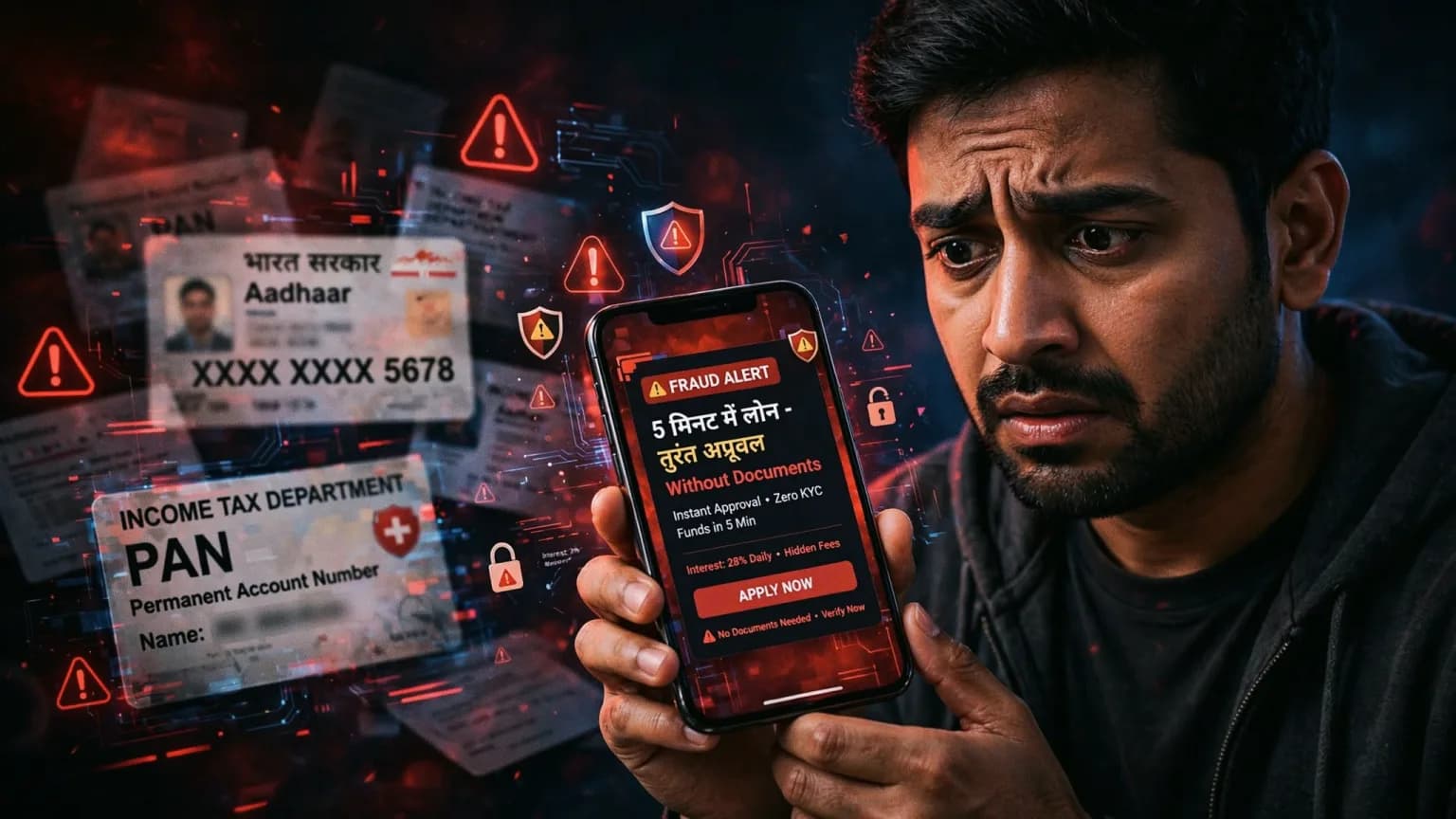
As digital lending grows in India, the threat posed by fake loan apps is also increasing. Apps claiming to offer loans within minutes without documentation can lure people into a trap with promises of easy money. They may be used not only for financial fraud but also to obtain personal data, blackmail, threaten and harass users.
The lure of ‘no documents’ and ‘loans in 5 minutes’
Fake loan apps commonly reach people through social media advertisements, search results, SMS links or WhatsApp messages. They advertise claims such as “no documents required”, “instant approval” and “loan in 5 minutes”. Sometimes these apps appear on popular platforms, leading users to mistakenly assume they are legitimate.
Personal data targeted as soon as the app is downloaded
After installation, users may be asked to provide sensitive information, including Aadhaar and PAN details, bank information and photographs. Some apps also request access to contact lists, photo galleries, cameras and SMS messages.
Granting unnecessary permissions can put personal data in criminals’ hands, allowing it to be used later for fraud or blackmail.
Blackmail in the name of loan recovery
One of the most serious risks associated with fake loan apps is their aggressive recovery tactics. If payment is delayed, criminals may threaten to call or message people on the borrower’s contact list.
In some cases, morphed or edited photographs are used to damage the victim’s reputation. Several complaints have also alleged demands for payments many times greater than the amount borrowed.
Harassment may continue even after repayment
In some cases, users report persistent phone calls, threatening messages and pressure even after repaying the money. Victims may face financial losses, threats to their reputation and psychological distress.
Serious effects on mental health
Crimes involving fake loan apps extend beyond financial loss. Blackmail and threats of public humiliation can cause severe psychological distress, which may worsen with continued harassment.
Anyone facing such threats or pressure should promptly seek help from family members, trusted people and the relevant law enforcement agencies instead of trying to handle the situation alone.
What to check before downloading a loan app
Before using a digital loan app, check the following:
* Is the app associated with an RBI-registered bank or NBFC?
* Are credible ratings and reviews available about the company and the app?
* Is an unknown link being used to prompt the download? If so, do not download the app.
* Does the app request unnecessary access to contacts, the gallery, camera or location? Do not grant permissions that are not needed.
* Does the company provide a valid address, email address and customer support number?
* Do not share personal or banking information without independently verifying the lender and its terms.
New number series to identify genuine financial calls
The government and regulators have taken steps to curb fraudulent financial calls and cyber scams. As part of these efforts, the 1600xx number series has been introduced for banks, NBFCs, insurance companies and other financial institutions.
The initiative aims to help consumers identify genuine financial service-related calls.
Report fraud immediately on 1930
Anyone who falls victim to financial fraud, threats or blackmail through a suspicious loan app should immediately contact the national cyber helpline at 1930 and file a complaint on the National Cyber Crime Reporting Portal.
Preserving transaction screenshots, bank details, phone numbers, messages, app information and other digital evidence may also help.
Digital convenience requires vigilance
Digital lending has made financial services more accessible, but convenience must be accompanied by caution. Before downloading a loan app, uploading documents or granting access to phone features, users should verify its legitimacy.
Rather than relying on attractive claims such as “loan in 5 minutes”, confirming the credibility of the app and the lending institution is the first step towards online financial safety.
Published: Monday, 12 October 2026 | 3:58 PM IST