
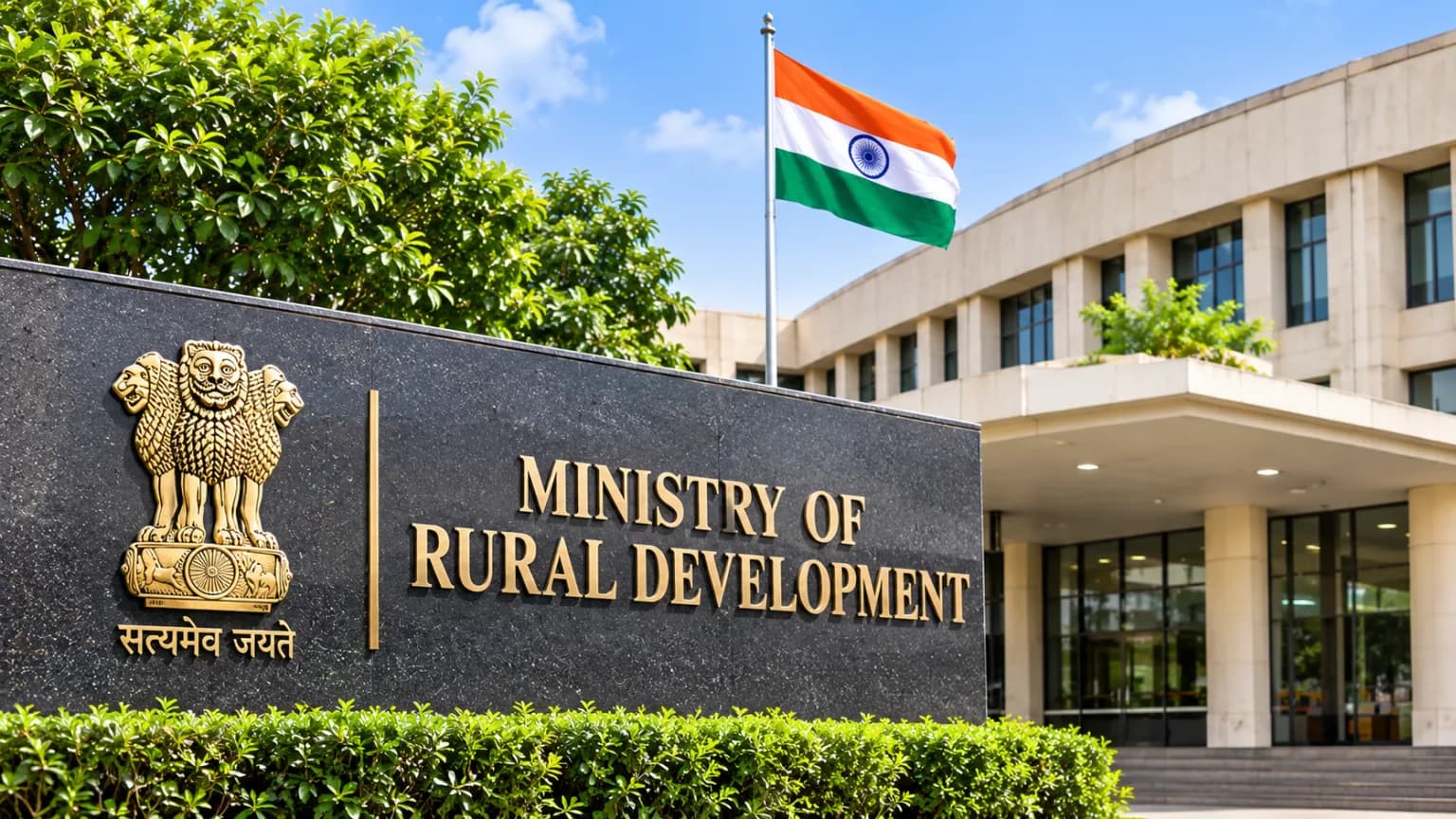
The Ministry of Rural Development has strengthened the framework for transparency, accountability and citizen participation in the implementation of the Viksit Bharat – Guarantee for Rozgar and Ajeevika Mission (Gramin) (VB-G RAM G) Act, 2025, by issuing guidelines for Ombudspersons and Appellate Authorities.
The guidelines aim to strengthen institutional mechanisms for safeguarding workers’ statutory rights, addressing implementation-related grievances and ensuring accountable delivery of programme benefits. The Ombudsperson will serve as a key component of the accountability framework, providing rural citizens with an accessible mechanism to register complaints and seek redressal.
Under the guidelines, a dedicated Ombudsperson at the district level will address grievances related to job cards, employment, wage payments, delay compensation, worksite facilities, muster rolls and denial of statutory entitlements. Complaints involving discrimination, harassment and violations of workers’ rights, particularly those of women and vulnerable groups, will also be covered.
The guidelines seek to strengthen the institutional capacity of Ombudspersons by expanding the pool of eligible candidates to include individuals with experience in rural development, public administration, law, academics, social work and management. Provisions relating to tenure and remuneration have also been revised to ensure continuity and effective functioning.
Emphasis has also been placed on field visits, community engagement and familiarity with digital platforms to improve the grievance redressal mechanism.
A key feature of the guidelines is the introduction of a dedicated digital platform for Ombudspersons. The platform will facilitate online registration and tracking of complaints, recording of proceedings, uploading of awards and monitoring of action taken. Geo-tagged and time-stamped photographs taken during field visits will further strengthen documentation, traceability and transparency.
The guidelines also reinforce social audits as an important mechanism for community-led transparency and accountability. Ombudspersons will be required to attend at least three social audit public hearings or Gram Sabhas every month to hear citizens’ concerns and facilitate appropriate follow-up.
Social audit findings, community feedback and individual grievances will help identify discrepancies and facilitate corrective action in accordance with prescribed procedures.
The Ombudsperson and Appellate Authority framework complements other accountability measures under VB-G RAM G, including digital monitoring, public disclosure and social audits. Together, these mechanisms are aimed at strengthening oversight, ensuring transparent implementation and providing a structured system for grievance redressal.
Through these guidelines, the government seeks to promote citizen-centric governance under VB-G RAM G and ensure that rural workers have accessible avenues to seek redressal, while making programme implementation more transparent, responsive and accountable.
Published: Wednesday, 18 November 2026 | 2:58 PM IST