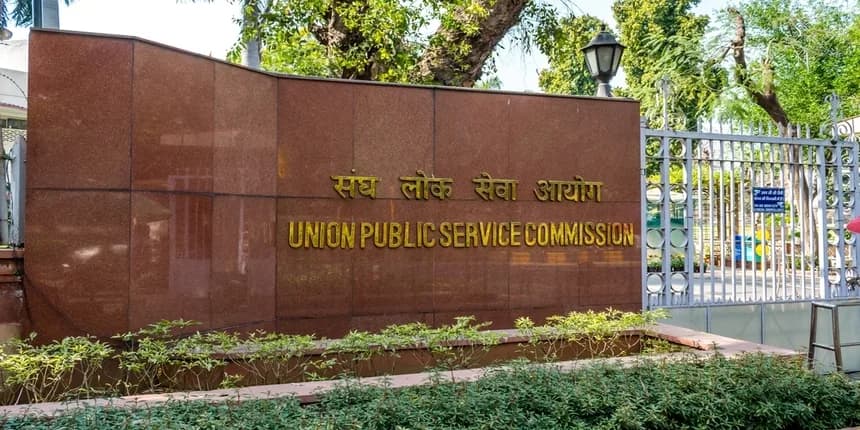
From an advisory body established under colonial rule in 1926 to an independent constitutional institution that conducts some of India’s most consequential examinations, the Union Public Service Commission (UPSC) completes a century on October 1, 2026.
Its 100-year journey mirrors the transformation of India itself – from a system in which entry into the higher civil services was largely shaped by colonial privilege to a constitutional framework built around merit, fairness, representation and equal opportunity.
Today, the UPSC conducts examinations for services ranging from the Indian Administrative Service and Indian Police Service to the Indian Forest Service, defence services, engineering, medical services and the Central Armed Police Forces. It also advises the government on recruitment rules, promotions, appointments and disciplinary matters.
But the institution’s origins predate its formal establishment by several decades.
From colonial examination to public service commission
The principle of competitive entry into public service took formal shape in 1855, when the Indian Civil Service examination replaced the East India Company’s system of nomination.
Yet the examination was conducted only in London and in English, with subjects such as Greek and Latin that reflected the educational system of Britain. For Indian aspirants, appearing for the examination meant travelling thousands of kilometres and competing within a system that offered limited access.
In 1862, Satyendranath Tagore, the elder brother of Rabindranath Tagore, travelled from Calcutta to England to take the examination. He cleared it in 1863 and joined the service in 1864, becoming the first Indian to enter what the British called the “heaven-born service”.
Surendranath Banerjee, Behari Lal Gupta and Romesh Chunder Dutt followed six years later. But opportunities remained severely restricted. The maximum age for the examination was progressively reduced from 23 to 19, leaving Indian candidates little time to prepare. By 1919, only 78 of 1,255 ICS officers were Indian.
Growing demands for greater Indian participation eventually led to institutional changes. The Government of India Act, 1919 provided for a Public Service Commission, while the ICS examination was held in India for the first time in 1922 at Allahabad alongside London. The Indian centre moved to Delhi in 1928.
The Lee Commission, headed by Arthur Hamilton Lee, recommended the immediate establishment of a statutory Public Service Commission in 1924. It also proposed a recruitment arrangement under which four of every ten new entrants would be British, four Indian and two Indians promoted from provincial services.
On October 1, 1926, the first Public Service Commission was established under the Public Service Commission (Functions) Rules, 1926, framed under the 1919 Act.
Sir Ross Barker, a member of the Home Civil Service of the United Kingdom, became its first Chairman. The Commission had four Members and was housed at Metcalfe House in Delhi.
Its powers were limited and the institution faced criticism from leaders of the freedom movement. Nevertheless, 1926 marked the beginning of a permanent public recruitment institution based in India.
From Federal PSC to constitutional body
The Government of India Act, 1935 expanded the institutional framework, transferring the power of appointment to the Governor-General and providing for a Federal Public Service Commission and Provincial Public Service Commissions.
On April 1, 1937, the body was renamed the Federal Public Service Commission. Combined competitive examinations for several services began in 1938, marking the beginning of unified, multi-service recruitment.
In 1940, Indians outnumbered Europeans in the ICS for the first time, with 625 Indians against 575 Europeans. In 1947, H.K. Kripalani became the first Indian Chairman of the Commission.
The first examination after Independence was held in December 1947, as the ICS gave way to the Indian Administrative Service. The following year, the first batch of Indian Foreign Service officers was recruited through the combined examination.
With the Constitution coming into force on January 26, 1950, the Federal Public Service Commission became the Union Public Service Commission, with R.N. Banerjee as Chairman.
The Constitution gave the Commission a clear institutional mandate through Articles 315 to 323.
Article 315 provides for Public Service Commissions for the Union and States, while Article 316 deals with the appointment of Chairmen and Members. Article 317 provides safeguards for their removal or suspension, requiring a presidential order following an inquiry by the Supreme Court.
Article 320 lays down the Commission’s core functions, including conducting examinations for appointment to Union services and advising the government on recruitment methods, promotions and disciplinary matters. Its expenses are charged to the Consolidated Fund of India under Article 322, while Article 323 requires it to submit an annual report to the President.
The constitutional framework was designed to protect the Commission’s independence and ensure impartiality in public appointments.
Building the Republic’s civil services
The UPSC’s responsibilities expanded rapidly after Independence.
In 1950-51, the first regular recruitment to the All-India Services under the Constitution resulted in 29 candidates being recommended for the IAS and 31 for the IPS. The All-India Services Act followed in 1951.
The Indian Forest Service was constituted as the third All-India Service in 1966, with its first selection held in 1967.
The examination system itself continued to evolve. Eighth Schedule languages were introduced as options for the Essay and General Studies papers in 1969. By 1976, applications had crossed one lakh for the first time.
The three-stage Civil Services Examination – Preliminary, Main and Interview – was introduced in 1979 following recommendations of the D.S. Kothari Committee. Eighth Schedule languages were formally incorporated into the Main Examination, while the London examination centre was discontinued.
Technology also began transforming the Commission’s operations. Computers were adopted in 1978 for processing applications, answer sheets and records, while Optical Mark Recognition technology was introduced in 1989.
The first woman Chairperson of the UPSC, Smt. Rose Millian Bathew Kharbuli, assumed office in 1992. The Essay paper was introduced into the Civil Services Main Examination in 1993, with interview marks increased from 250 to 300.
The Online Recruitment Application system was launched in 2000, eventually making applications for several examinations fully online by 2010.
Inclusion becomes part of the institutional journey
The evolution of the UPSC has also been closely linked to expanding access to public service.
In 1972, Kiran Bedi became the first woman selected by the Commission for the Indian Police Service. Of the 80 vacancies that year, she was the only woman.
Women candidates have since become an increasingly significant part of the civil services. Only three women were among the 83 candidates recommended in the Civil Services Examination in 1952. In the 2025 examination, 299 of the 958 recommended candidates were women, accounting for 31.2 per cent. Women also secured 11 of the top 25 ranks.
Representation of Scheduled Caste and Scheduled Tribe candidates has also increased significantly. Nine SC candidates were recommended in 1955, compared with 158 in 2025. For ST candidates, the figure rose from two in 1956-57 to 73 in 2025.
The number of Persons with Benchmark Disabilities recommended in the Civil Services Examination increased from three in 2002 to 42 in 2025.
The Commission introduced scribes for visually impaired candidates in 1994. Today, eligible Persons with Benchmark Disabilities are entitled to scribes and additional time, can choose their examination centre and receive assistance during interviews.
Women candidates receive fee exemptions, while age relaxations have been extended in specific circumstances to groups affected by events such as the Goa liberation, the Bangladesh Liberation War, the Uganda-Zanzibar crisis and the Gulf War.
The Commission’s approach to language has also changed. In 1970-71, it informed the government that the Personality Test could be conducted only in English. By 1980-81, candidates were allowed to answer in an Indian language with an interpreter provided by the Commission. In 2010-11, 803 candidates chose to do so, while 307 did so in 2023-24.
A system operating at unprecedented scale
The scale of the Commission has expanded dramatically over the past century.
Applications across examinations and recruitment by selection increased from 42,727 in 1950-51 to a peak of 45,10,044 in 2022-23 – more than a hundredfold increase.
In 2022-23 alone, the Commission conducted 15 examinations involving 33,51,916 applications. It also received 233 requisitions for 4,411 posts through recruitment by selection, involving another 11,58,128 applications.
The number of examination centres has grown from eight in 1950 to 86 in 2026.
The Commission’s advisory role has expanded alongside its recruitment responsibilities. In 2023-24, it processed records of 24,581 officers for promotion, while 532 officers were inducted into the All-India Services.
Since 2012-13, following the Supreme Court’s September 22, 2006 judgment in Prakash Singh vs Union of India, the Commission has also empanelled senior IPS officers for appointment as Director General of Police or Head of Police Force in States.
Technology and transparency in the examination process
The modern UPSC is increasingly technology-driven, with digital systems being introduced across registration, examination management, recruitment and security.
The Civil Services Aptitude Test was introduced in 2011, while the Civil Services Main Examination was restructured in 2013 to include four General Studies papers, including Ethics, Integrity and Aptitude.
Computer-Based Recruitment Tests were also introduced, and the CSAT was made a qualifying paper in 2015.
A Query-Based Marks Information System was introduced in 2018, while a dedicated control room for year-round examination monitoring was established in 2019.
The Commission has continued to strengthen examination security. In September 2025, it piloted AI-enabled facial authentication at selected centres in Gurugram during the NDA & NA (II) and CDS (II) examinations. The technology was implemented at scale during the Civil Services Preliminary Examination on May 24, 2026, when facial authentication was conducted for around 5.50 lakh candidates through invigilators’ mobile phones. The process took about six to eight seconds per candidate.
Ahead of the 2026 Civil Services Preliminary Examination, an analysis of 15 years of candidate data identified and rejected 569 applicants who had furnished false information to claim additional attempts.
The Commission has also introduced a Universal Registration Number through a revamped portal launched in May 2025, replacing the One-Time Registration system with a persistent identity for candidates across examinations.
Randomised interview boards were introduced from the Combined Medical Services Examination, 2025, while a 30-channel IP-based candidate helpdesk became operational from February 2026. The helpdesk had handled more than 50,000 calls by the time of the centenary.
New examination centres were also added in Bhubaneswar, Kanpur and Meerut for the Civil Services Preliminary Examination in 2026, taking the number of centres for the examination to 83. Alwar, Hisar and Kinnaur were added for the NDA & NA (II) examination.
Protecting merit from the examination hall to the final list
Behind every UPSC examination lies an elaborate system designed to protect confidentiality and fairness.
Candidates choose only their city, while the system determines the examination venue and room. In the Civil Services Main Examination, candidates may choose from 48 optional subjects, requiring examination packets to be organised precisely for each venue and room.
Question papers are prepared from question banks developed by academic experts working anonymously under strict confidentiality. No single expert sets an entire paper or knows which questions will ultimately be selected.
The Commission says the system is built around a “need to know” principle so that no individual has access to the complete process.
The same emphasis on fairness continues in evaluation, where the system is designed to remain blind to a candidate’s identity.
When public service needs to move faster
The Commission’s history also contains examples of how it has responded to national emergencies and urgent manpower requirements.
In July 1948, a Special Recruitment Board recruited experienced personnel between 27 and 45 years of age into the IAS and IPS on the basis of records and interviews.
A special recruitment drive in 1956-57 screened more than 22,000 candidates. In 1958, a Special Recruitment Board selected 197 scientists and technologists, including applicants from overseas, for a national pool whose strength rose to 500 by 1962.
During the 1962 emergency, an Emergency Commission filled 1,353 defence-related posts in two months.
During the COVID-19 pandemic, when train services were disrupted, the Commission reimbursed airfare for interview candidates as a one-time measure. It also coordinated with States to facilitate movement through restricted areas and provided assistance with lodging and transport. Candidates were given sealed kits containing masks, face shields, sanitiser and gloves.
Merit beyond the final list
The UPSC’s role does not necessarily end when the final selection list is announced.
Candidates who clear every stage of an examination but narrowly miss the final list can voluntarily make their details available to potential employers under the Public Disclosure Scheme.
Introduced on August 20, 2018, and first used for the Combined Medical Services Examination, 2017, the system was revamped and renamed Pratibha Setu on June 9, 2025.
The platform connects eligible candidates with verified employers, including government Ministries, public sector undertakings, autonomous bodies and private organisations.
A century marked by adaptation
The UPSC’s institutional history is also reflected in its buildings and traditions.
Metcalfe House, where the Commission was initially housed, carries another important chapter in India’s civil services history. On April 21, 1947, Sardar Vallabhbhai Patel addressed the first batch of civil service probationers there and described the civil services as the “steel frame of India”. The date is now observed as Civil Services Day.
Dholpur House on Shahjahan Road, built in 1920 by Maharaja Rana Udaybhanu Singh of Dholpur, became government property after the merger of Dholpur State with the Union in 1949. In 1952, it became the Commission’s permanent headquarters.
The UPSC Museum, opened on November 11, 2016, is another window into the institution’s history. It is free and open to the public on weekdays, with a 360-degree virtual tour also available.
The Commission has also commemorated its milestones through postal issues. A 25-paise stamp issued on November 8, 1977, for its Golden Jubilee featured the sun, symbolising impartiality and equal opportunity.
The UPSC at 100
The Commission enters its second century under Chairman Dr. Ajay Kumar, who has headed the institution since May 15, 2025. It currently has eight Members, including three women.
Its responsibilities today span examination-based recruitment, specialist selection, recruitment rules, promotions, disciplinary matters and induction into the All-India Services.
Over 100 years, the central question facing the institution has remained remarkably consistent: how to identify people capable of serving the public while ensuring that access to that opportunity is not determined by privilege.
The answer has evolved with India – from competitive examinations under colonial rule to a constitutional institution using digital technologies, multilingual systems, accessibility measures and increasingly sophisticated examination-security mechanisms.
As Dr. Ajay Kumar puts it: “An institution that has endured for a hundred years does so not because it resists change, but because it knows what must never change.”
For the UPSC, the principle at the heart of its centenary is the continuing effort to recognise merit, uphold fairness and extend opportunity beyond privilege, geography, language and circumstance.
A century after the first Public Service Commission was established in India, that remains the institution’s defining responsibility.