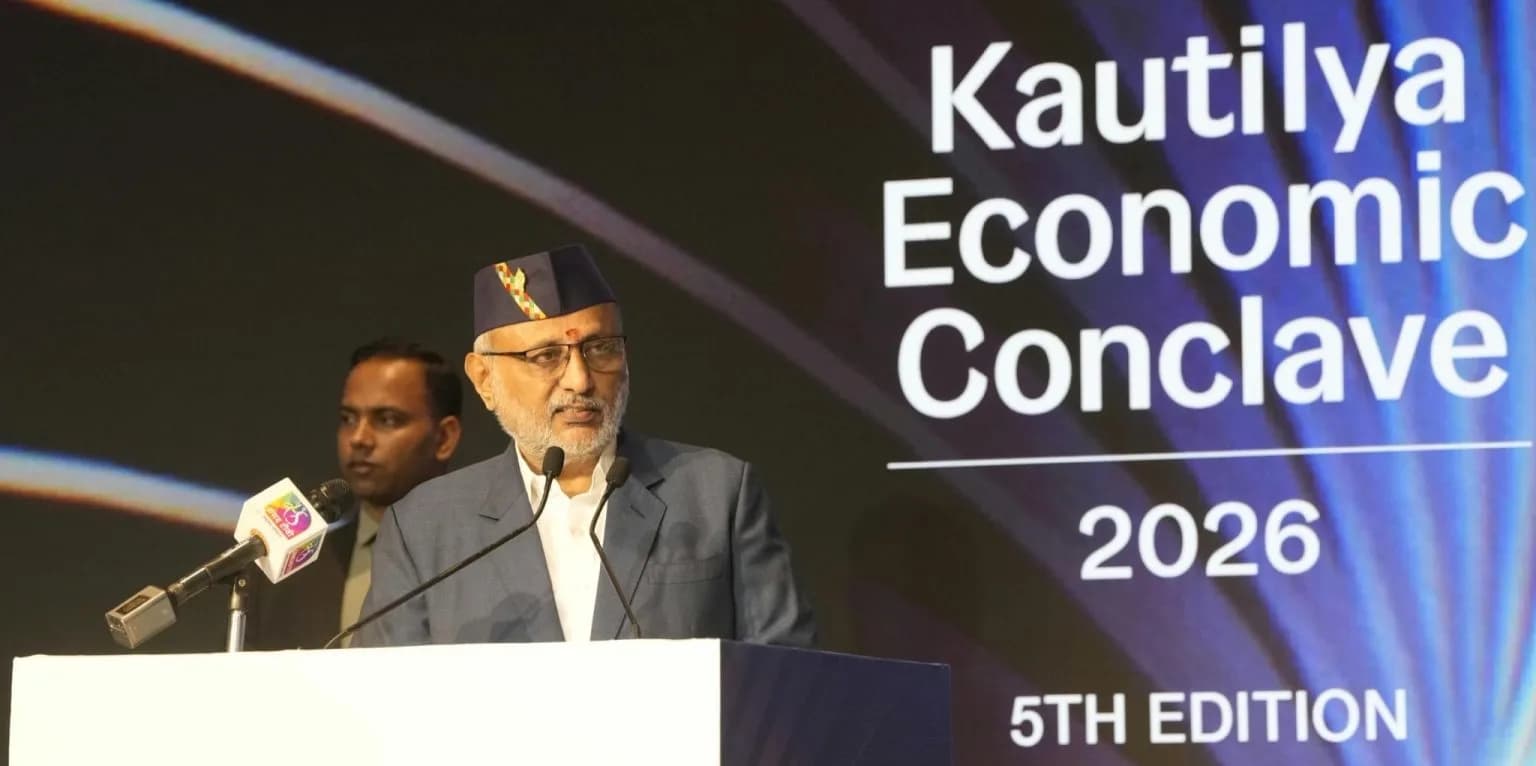
Vice-President C. P. Radhakrishnan on Saturday called for resilient, inclusive and responsive economic policies to address rapid changes in the global economic environment while delivering the inaugural address at the 5th Kautilya Economic Conclave here.
The conclave, organised by the Institute of Economic Growth (IEG) on the theme “Resilience in an Age of Flux”, brought together policymakers, economists, academics, business leaders and other participants.
Referring to the IEG’s legacy, Radhakrishnan said the institute has remained closely associated with India’s development journey since its establishment in 1952 under economist V. K. R. V. Rao.
He said sound policymaking must be based on an understanding of ground realities and remain flexible enough to respond to changing circumstances.
“In times of flux, decisiveness must be embedded in consensus,” Radhakrishnan said, stressing that while debate and discussion are integral to democracy, they should ultimately lead to decisions that command broad acceptance.
As Chairman of the Rajya Sabha, he said free and transparent debate strengthens democracy, while rights and duties must go hand in hand.
Radhakrishnan said India has demonstrated that democracy and development can progress together, with consensus-building helping give economic reforms greater durability and sustainability. He said this experience provides an important foundation for the vision of a Viksit Bharat by 2047.
Emphasising the link between economic and social resilience, he highlighted the role of the JAM trinity, Direct Benefit Transfer and the Goods and Services Tax in strengthening financial inclusion, transparency and formalisation.
He said more than 590 million Jan Dhan accounts had been opened as of August 2026, while GST registrations increased from around 6.65 million in 2017 to 16.5 million in May 2026.
Radhakrishnan said inclusion should go beyond bringing people into the formal economy and enable them to create value, generate income and become entrepreneurs.
He highlighted the contribution of around 9.2 million Self-Help Groups covering more than 100 million rural women and the emergence of over 34.6 million Lakhpati Didis. He said the increasing participation of women in education and the economy reflected India’s transition from women’s empowerment to women-led development.
The Vice-President said economic resilience is built not only in boardrooms and financial markets but also when women in villages gain access to bank accounts, receive benefits directly, enter the formal economy and transform Self-Help Groups into enterprises.
He said more than 250 million Indians had moved out of extreme poverty, calling it a historic achievement, and stressed that every state, district and village should be an equal partner in India’s development journey.
Radhakrishnan also welcomed institutional collaborations involving the University of Delhi, Delhi School of Economics, London School of Economics and the Institute of Economic Growth. Such partnerships, he said, along with India’s expanding trade engagements, could strengthen research, education, innovation and entrepreneurship.
Concluding his address, Radhakrishnan said India’s resilience would come “not from resisting change, but from embracing it with confidence, inclusion and a spirit of collective endeavour.”
He expressed confidence that deliberations at the 5th Kautilya Economic Conclave would contribute to the national endeavour of building a developed India by 2047.
IEG President N. K. Singh, IEG Board of Governors Chairman Michael Debabrata Patra and other dignitaries were present on the occasion.